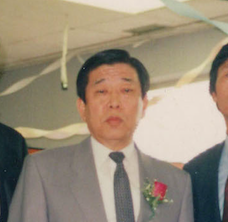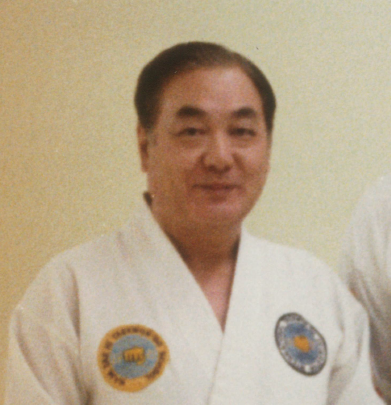
Nam Tae-Hi’s years in the Korean CIA

We often hear about North Korea and other dictatorships using Tae Kwon Do for espionage and political missions, but South Korea and the United States have a history of doing the same. During the first of three videotaped interviews in 2011, I asked Nam Tae-Hi, a martial artist who helped to create Tae Kwon Do in the 1950s, if he’d ever been involved with the Korean Central Intelligence Agency (KCIA). The audio is fuzzy, because the interview took place during a tournament, but he nodded yes.

It was an extraordinary admission from someone famous for helping to found a martial art based on Integrity, Courtesy and other tenets. The KCIA was known in his day for terrorizing people. Today, almost no one knows that Nam was a KCIA agent.

“What years?” I ask him in this video clip from my 2011 interview (with his son, Chris Nam, translating for us).

“1965 to 1972,” Nam replies.

“What was your role?” I ask.

“It’s confidential,” he says.

I knew this part of the interview would be difficult. I knew that few people had asked Nam about those years. Before he died in 2013, he was a grandmaster of Tae Kwon Do and one of my heroes. He still is my hero. In my updated book, “A Killing Art: The Untold History of Tae Kwon Do” (2016), I devoted a chapter, called “SuperNam,” to describing his incredible, three-day battle scene in 1951 and his now-famous demonstration in front of South Korea’s military leaders in 1954, when he smashed thirteen roof tiles with a single punch. But how do you reconcile your superhero with an agency that tortured and killed innocent people?
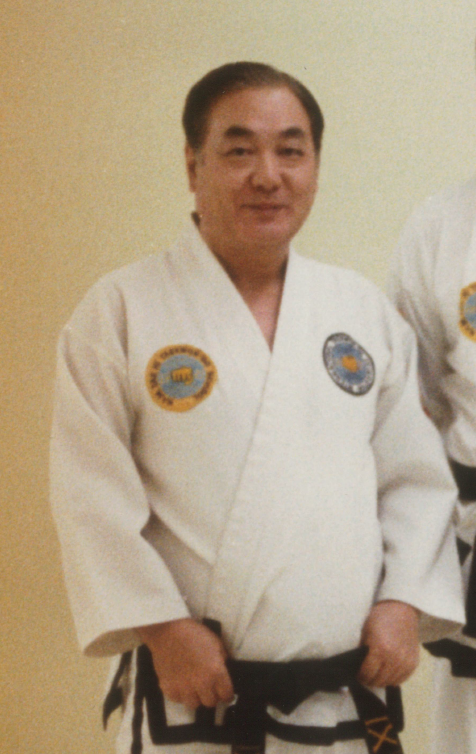
Nam Tae-Hi in 1978 in Chicago, U.S. Photo courtesy of Dennis Callanan.
Nam Tae-Hi, Chicago, U.S., 1978. Photo courtesy of Dennis Callanan.

He and his brother-in-law worked for the KCIA in Malaysia from 1965 to 1970. I wanted to know what they did there. In the video, Nam turns to his son and asks: “Why does he want to know?”

“I’m wondering if Tae Kwon Do was involved,” I ask.

“There was no relation to Tae Kwon Do,” Nam replies. “My main role in Malaysia was working with the KCIA, but I continued to teach Tae Kwon Do there.”

“I ask because many officers, many soldiers, many Tae Kwon Do executives were also KCIA agents,” I say.

“I agree,” Nam says.

In the video, as well as in the second and third videos, I add that the KCIA and South Korean dictatorship channeled money to a bunch of American Karate and TKD gyms, such as Jhoon Rhee’s school, in the 1960s and 1970s. In my book, I also describe how the KCIA hired martial artists to do their dirty work.

“Although I don’t know exactly what happened, it would have been much easier to work with the KCIA if you also taught Tae Kwon Do, so there might have been a connection,” Nam says.

Jhoon Rhee and Nam weren’t the only ones with those connections. After Malaysia, from 1970 to 1972, Nam travelled, off and on, around the world with Choi Hong-Hi, the man who’d named Tae Kwon Do in 1955 and founded the International Taekwon-Do Federation in 1966. During those years, Choi feared for his life because of the KCIA, even though Choi had recruited high-ranking KCIA officials to become ITF executives. Nam, Choi and their super-athletes had turned Tae Kwon Do into one of the world’s the hottest martial arts, and some of these men collaborated in political and espionage activities.

Nam had respect for the KCIA, but he disagreed with its nefarious plans, especially one called “Koreagate” in the U.S. from 1970 to 1976, when KCIA operatives and their martial-artist thugs threatened Korean-Americans and bribed American politicians. Martial artists worked for the KCIA branches in charge of assassinations, abductions, sabotage, and spy networks in Korea and overseas – and the KCIA and South Korean regime had helped to set up martial arts gyms in the U.S. and other countries to assist with those networks. For example, between 1970 and 1976, the KCIA hired martial artists in Chicago, Washington, New York City, San Francisco and Los Angeles to harass, interrogate or kidnap people who criticized the South Korean regime. Nam lived in Chicago at the time, in the middle of the whole thing, but he says that he wasn’t involved — and that the KCIA didn’t fund his gym.

“It costs a lot to open a dojang (a Tae Kwon Do studio), and I’m guessing they might have been funded by the KCIA, but I was not one of them,” Nam says. And in this second video clip, he explains more. As noted by George Vitale, a martial arts leader and writer who was holding the camera during my interview with Nam, the KCIA wasn’t only nefarious; it also promoted TKD simply as a cultural and athletic activity.
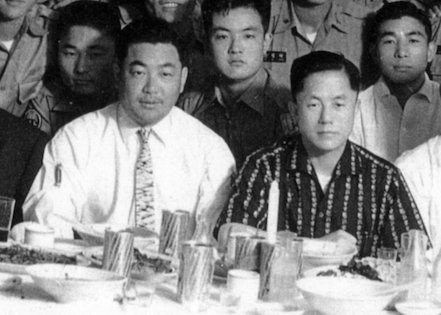
Nam Tae-Hi sits on the left and Choi Hong-Hi on the right, in the 1960s. Photo courtesy of Choi.

I’m glad I asked Nam about his role. Choi had accused him of a few things – like accepting money from the KCIA – and Nam needed to tell his side of the story. My long interview with Nam clarified that that the KCIA had no role in his Tae Kwon Do. In fact, he was often caught in the crossfire between Choi and KCIA agents spying on Choi. For example, in this third video, Nam tells me that during a 1970 world tour, the South Korean embassy in each country would host dinners or social events for Nam, Choi and the athletes.

“There was always at least one KCIA member present,” Nam says. “At these dinner parties, which included ambassadors, councillors and high-ranking representatives of Korea, General Choi badmouthed South Korean President Park Chung-hee.” Choi had been angry at Park and other generals for excluding him from the May 16, 1961, coup d’etat in South Korea, and Choi had always looked down on Park in any case. Nam said that KCIA agents would routinely report Choi’s trash-talk to Park, including the badmouthing during the 1970 tour. This was terrifying, as Park had a reputation for killing his enemies.

“General Choi must have felt unsafe in Korea,” says Nam of Choi’s time after the 1970 tour.

In 1972, Choi fled to Canada, with Nam at his side. Nam left the KCIA that same year, he says. As I describe in my book, Nam moved to Chicago, Illinois, and opened his own gym – and started a new life as an American.

During my interview with him, Nam got emotional when telling me these final stories. He seemed near tears in parts of the video, but he told his stories anyway. I admired his courage in more ways than one. He was SuperNam.
Were mixed martial arts better in 1965?

In 1965, the South Korean dictatorship sent a group of martial artists on a world tour to show off a “new” martial art called “Tae Kwon Do,” but the art wasn’t new. A 40-second video clip from the tour in 1965 shows how similar the new art was to Karate: the two men who lightly sparred on that Oct. 24th day moved in a very Karate-like way. I’m not sure who named the video The Skillful Art of ‘Chop-Chop’, but judging from the faces of the 1,500 spectators in the basketball stadium in Munich, West Germany, people were impressed.

The event was called Karate World Elite in a banner in the video. There was no mention of Tae Kwon Do. In a world where Tae Kwon Do was Karate, and Karate was Jiu Jitsu, and Hapkido and Judo was sort of the same, too, and where martial artists regularly borrowed and stole from one other, you have to ask yourself how Korea’s leaders convinced so many people that Tae Kwon Do was uniquely Korean or even new.

1965 Tae Kwon Do demonstration team in Turkey
In 1965, in Turkey, Choi Hong-Hi (in shades) stands beside an official and athletes about to show off Korean Karate. In uniform, from left to right: Jong-Soo Park, Jae-hwa Kwon, Kim Joong-keun and Han Cha-gyo (off camera). Photo courtesy of Choi Hong-Hi.

TKD was based on Japanese Karate back then — but South Korean military leaders hid the Japanese parts, lied about TKD’s origins, and used martial arts to show off the power of Korea’s authoritarian government. A Korean general, Choi Hong-Hi, had stolen and plagiarized from Japan’s Shotokan Karate and made up the name “Tae Kwon Do” in 1955. He created the “International Taekwon-Do Federation” in 1966. In turn, the Korean Central Intelligence Agency (KCIA) stole and plagiarized from him, creating the “World Taekwondo Federation” in 1972, and went on to bribe officials to include TKD in the Olympics in later years. None of them wanted to admit that Korea’s martial art started with Karate from Japan, their historical enemy.

But, if anything, the awkward jumping techniques in the 1965 video show how TKD was trying to be different from Karate. In those days, Karate didn’t involve much jumping. By 1968, TKD also distinguished itself by featuring many “Foot Sparring Techniques” – a second big difference from Karate. For example, a one-minute clip from around 1968 shows Cho Sang-Min (a KCIA agent by the way) and another martial artist slowly demonstrate strikes and blocks using only legs.

1965 Tae Kwon Do demonstration, in Egypt, where Kwon Jae-Hwa broke a huge stone with a hand strike.
In 1965, in Egypt, audience members weren’t impressed by the Korean Karate demonstration, until Kwon Jae-Hwa (second person from the left) broke a huge stone with a hand strike. Photo courtesy of Shin-Gyu Kang and Kwon Jae-Hwa.

Today, people are still obsessed with saying that their Karate is better than Tae Kwon Do, or our TKD is better than their Karate, or that Brazilian Jiu Jitsu or mixed martial arts is better than everything else. The arguments are ridiculous, and probably reveal more about ego and insecurities than anything. A great kick, punch or take-down is only as good as the person who does it. In any case, martial arts have borrowed from each other as long as people and cultures have mixed.

My book, A Killing Art: The Untold History of Tae Kwon Do (2016), gets into these issues, including details about the 1965 tour of Europe, the Middle East and Asia. General Choi led the team, dubbing it the Ace Demo Team, which included Han Cha-gyo, Jong-Soo Park, Joong-keun Kim and Jae-hwa Kwon. Carl Wiedmeier, owner of the Union Jiu Jitsu and Judo Schools C. Wiedmeier Karate Institute, in Munich, also joined them on stage. General Choi’s former right-hand man, Lieutenant Nam Tae-Hi, joined the Ace Team when they arrived in Singapore and Malaysia, where Nam was working for the KCIA.

So, the next time someone brags about how their art is the best, think of those videos from the 1960s – and about how everyone used to borrow and steal from everyone else. It was all about mixing and challenging then. It seemed more mixed martial arts than MMA today.

For detailed info about the similarities between Tae Kwon Do and Karate, See Udo Moenig’s essay, “The Evolutionary Process of Teakwondo Techniques through Competitionalization” (his unpublished master’s thesis from June, 2010).

Thanks to Shin-Gyu Kang for photos and videos from 1965. He got many of them from Grandmaster Kwon, Jae-Hwa. There dozens more photos on Kang’s site: http://www.taekwondo-europe.eu

Also, thanks to Stephen Doyle and JTFVideos1 for sharing the original 1968 video on YouTube. JTFVideos1 is from the Juntong Taekwondo-Do Federation.

Taekwondo’s Kim Un-Yong and espionage

Dec. 2018 — Even near the end of his life, Kim Un-Yong, the “father” of Olympic Taekwondo, tried to make a come-back. It’s worth looking at a few of his espionage activities from the past, partly to see why there are still problems in Tae Kwon Do today.

In 1961, a group of powerful, vicious men helped a general, Park Chung-hee, to take over South Korea in a bloodless coup d’etat. These men would build and use many Tae Kwon Do instructors for espionage missions over the next few decades. Kim was a high-ranking Korean CIA agent known as “Mickey Kim” and worked for Park after the coup. During an investigation by the U.S. House of Representatives regarding illegal KCIA activities in the United States in the 1960s and 1970s, a number of previously classified documents shed light on what Kim and others were doing on those missions.

In 1965, for example, Mickey Kim helped Korea’s dictator to negotiate building a gun factory with the help of U.S.-based Colt Industries. In 1971,as part of a mission to “collect” American donations for a South Korean regime, Kim asked this same company for a “contribution.” Colt officials authorized a cheque for $100,000, payable to Kim Un-yong, but on the advice of lawyers withdrew it because they discovered that such donations were illegal in South Korea. The American government keenly watched such illegal activities before taking action.

The following two documents are from pages 76 and 104 of “Investigation of Korean-American Relations: Report of the Subcommittee on International Organizations” (Oct. 31, 1978). They are from some of the many reports in my revised book, A Killing Art: The Untold History of Tae Kwon Do (2016).KimUnYongKCIAcitationKimUnYoung,KoreanCIA,Colt,1971