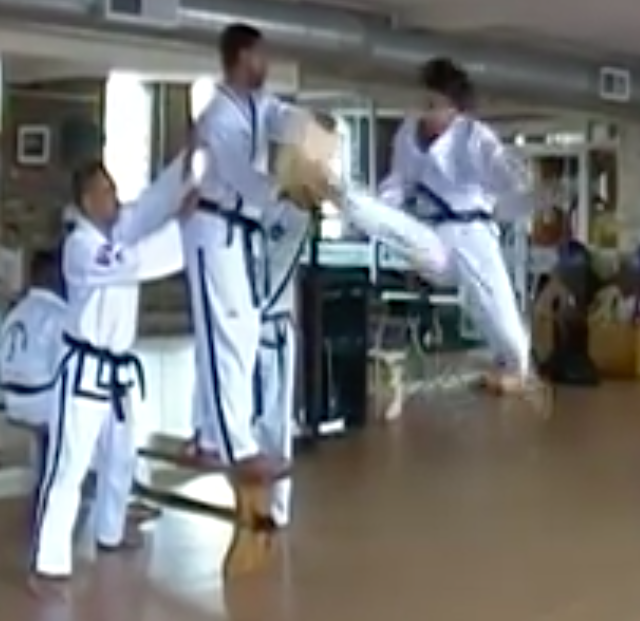
In July, 2015, I passed my fifth-degree black belt test in Tae Kwon Do. Thank you to Master Darin Gibson and United Traditional Tae Kwon-Do Canada for the test. Here’s a short video of one of my favourite kicks — a jumping twisting kick that I completed during the test.
Category: Videos
Jong-Soo Park demonstrates self-defence
In this 1973 video, Grandmaster Jong-Soo Park, one of my past instructors, demonstrated matsogi, or one-step self-defence.
Nakayama (1958)
My instructor, Mr. Di Vecchia, passed the following movie tip to me. It’s from 1958, featuring Karate leader Masatoshi Nakayama. What’s incredible about this video is how similar his movements are to the movements in traditional Tae Kwon Do, which I still practice. Notice his fluidity — and the power in his kicks.
WTF’s Choue Chung Won thanks pioneers
The World Taekwondo Federation (WTF) doesn’t always acknowledge the pioneers who began the martial art in the 1950s and early 1960s, especially those from the International Taekwon-Do Federation (ITF), which was created long before the WTF. In this rare interview, however, WTF President Choue Chong-Won changes course, saying that the WTF has to acknowledge “those people who introduced Tae Kwon Do in difficult times…” He also refers to “Mr. Chang,” the North Korean ITF leader. This clip is from filmmaker Luan Van Le.
Punching sparring pattern, by C. K. Choi
Grandmaster Chang Keun (C. K.) Choi developed Sparring Patterns that he considers essential for training. The videos are now available on DVD, but GM Choi allowed me to keep one posted here. You should practice the patterns in at least three positions (stationary, sliding forwards and sliding backwards). And you should execute the techniques continuously, with maximum speed and power, which means that you need to engage the hips and all your momentum. For more details, please see my past blogs and Choi’s DVD.
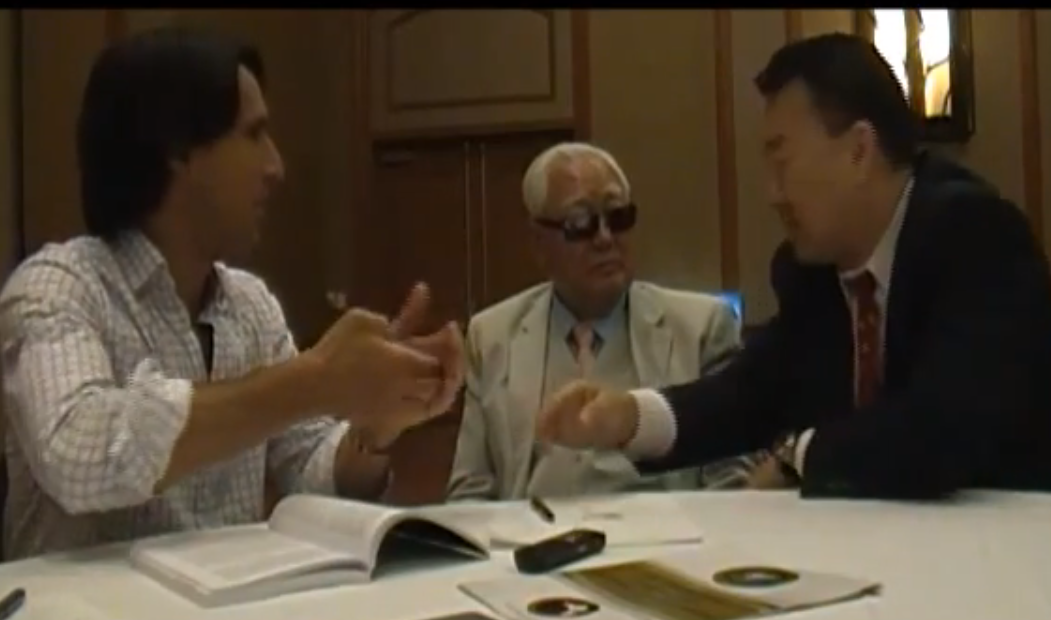
Piercing someone with spearhand strike
Grandmaster Nam Tae-Hi, who passed away on Nov. 7, 2013, came as close to being superhuman as was humanly possible. A lot has been written about his martial arts power, fighting abilities and leadership in Taekwon-Do and Taekwondo – in all styles. The last time that I interviewed him, I asked about a controversial technique, the “straight-fingertip strike” or “spearhand,” which was supposed to puncture a person’s skin and which he’d used during a battle in the Korean War (in 1951). I’d written about the horrific scene and technique in chapter 4 of my book, A Killing Art, and a couple of readers laughed at the notion that fingers could puncture skin. In this video, from 2012, I asked Nam if his hand had actually pierced someone, and he cried as he told me about the 1951 war scene that he miraculously survived. I’ll never forget this interview or the one in 2001, when I asked him if such a technique were possible, and he replied in a calm voice: “You cannot stay in the opponent’s stomach. You have another opponent, maybe. And though you made a hole in the first man’s body, it does not mean your opponent will stay still; he will still punch and kick. Pull back and prepare the next action.” It was then that I realized the difference between training now and sixty years ago, between the part-time hobby of learning a martial art and his full-time job of teaching a killing art in the 1950s and 1960s. His 1951 battle was traumatic, and I mention it only to show his power:
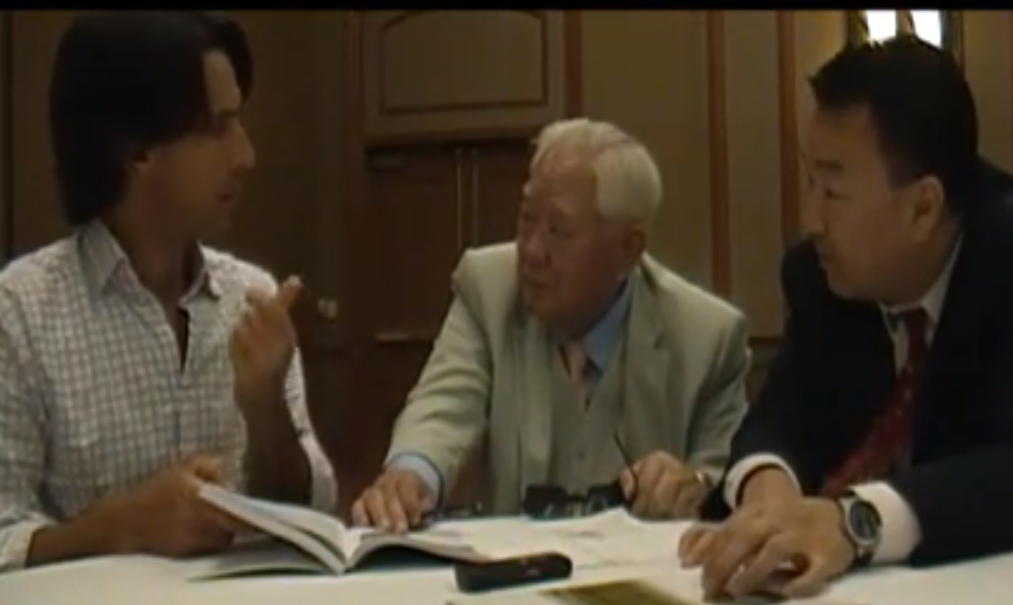
TKD named in a geisha house in 1955
Tae Kwon Do came from Korean Karate (also known as “Shotokan Karate,” “Tang Soo Do” and “Kong Soo Do”). In 2011, TKD Grandmaster Nam Tae-Hi and I spoke about my book and who created and announced the name “Tae Kwon Do.” Using dictionaries, he and General Choi Hong-Hi had made up the name in 1955 to hide the fact that they and their soldiers were training in Karate, Japan’s martial art, which was like saying you were a terrorist. At a martial arts meeting in a geisha house (the “Kugilgwan”) in 1955, Choi presented a fictional argument connecting Taekwon-Do to Taekkyon, an old martial art. The truth is that TKD was Korean Karate, not Taekkyon, at that time. In this video, Nam (in the white suit) talks about some of the issues. Chris Nam, his son, translates.
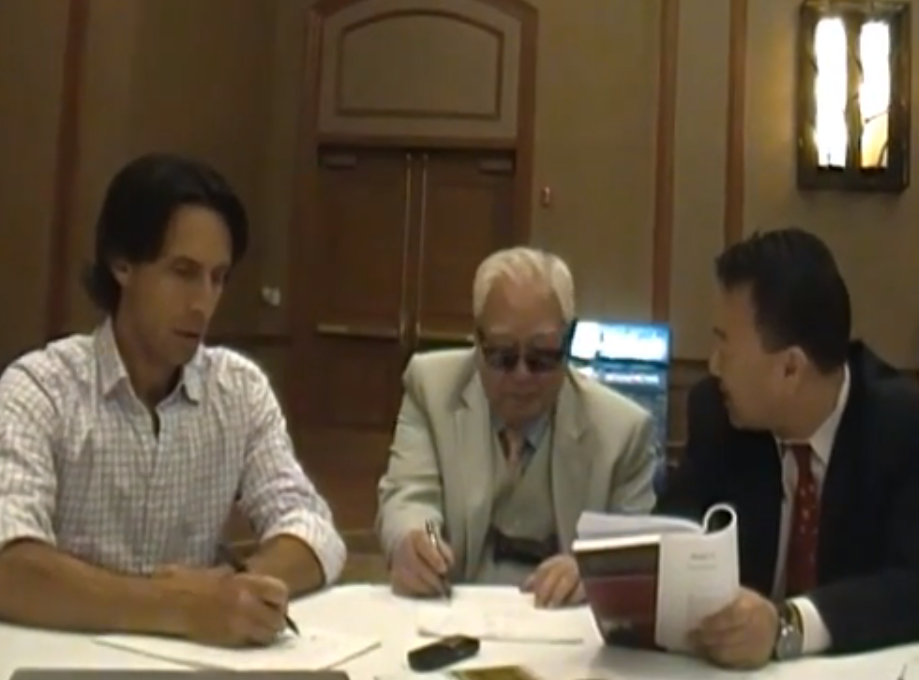
Nam Tae-Hi & Alex Gillis talk TKD
In Dallas, USA, in 2011, I spoke to one of Tae Kwon Do’s creators from the 1950s, Nam Tae-Hi, and his son, Chris Nam, who interpreted. I was taking notes for a revision of my book, A Killing Art: The Untold History of Tae Kwon Do. Grandmaster Nam helped to create TKD and was later a leader in both the International Taekwon-Do Federation (ITF) and World Taekwondo Federation (WTF), but his contribution pre-dated both of those, and he worked on the ITF much more.