Blog
A tough talk with GM C. K. Choi

Posted by This e-mail address is being protected from spambots, you need JavaScript enabled to view it

May 6, 2010

s2010008

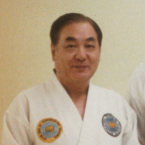
Last week, my black-belt friends and I met Grandmaster C. K. Choi, and, once again, he amazed me with his sparring techniques, his tough stories from the 1950s and 1960s and, more than anything, his wise words. This man has both brains and brawn, and he's taken a lot of abuse because he refused to get embroiled in North Korean politics and South Korean syndicates. He reminds me of the Tibetan urban monks I met when I hiked through the foothills of the Himilayas, except he's a fighting expert, too. Lucky for us, his Sparring Patterns will soon be available on DVD. I'll forward details as I get them.

In the meantime, his book, The Korean Martial Art of Tae Kwon Do & Early History (recently reprinted), contains newly added Sparring Patterns. His goal with the book is to relate the true history of Tae Kwon Do -- the true history of Olympic, North Korean and all types of TKD --which is a rarity these days. The book is available on his website (at the bottom of the page).

By the way, the people in the photo are (from left to right): Karen, Duane, Marc, me, Floyd, Grandmaster C. K. Choi, Master Di Vecchia, Martin, Alex, Talmon and Jason.

 
South Korean government takes over TKD headquarters

Posted by This e-mail address is being protected from spambots, you need JavaScript enabled to view it , March 1, 2010

The home page of Tae Kwon Do Times magazine notes this breaking news : "National Assembly in South Korea passes special law putting Kukkiwon under government control on Feb. 18, 2010. Anyone with a criminal record will no longer be allowed to be Kukkiwon president."

Knowing the criminal past of the current Kukkiwon president, Lee Seng-wan, the government announcement is no surprise.

 
Former criminals running World Taekwondo Headquarters:

Lee Seng-wan is President and Kim Un-Yong is Honorary Chairman of the Kukkiwon

Posted by This e-mail address is being protected from spambots, you need JavaScript enabled to view it , Feb. 21, 2010

While catching up on news about Olympic Tae Kwon Do, I recently read that former Korean godfather Lee Seng-wan is now President of the Kukkiwon, headquarters of world Taekwondo. This is extraordinary.

In 1987, under a South Korean dictatorship, Lee Seng-Wan was the godfather of a gang hired by Korean politicians to attack a democratic party. Fifty hoodlums, backed by the Korean Central Intelligence Agency (KCIA), descended on twenty meetings, destroying furniture and attacking people with clubs. Korean media extensively covered the story. Lee Seng-Wan (also spelled Seung Wan and Sung Wan) had been a national sparring champion in the 1960s and had become head of the Jidokwan, one of the nine gyms that had formed Kim Un-Yong's World Taekwondo Federation (WTF). Lee was sentenced to 1.5 years in prison for his role in the 1987 attack -- called the Yongpal Incident.

attackduringyongpalincident1987

Thugs attack democracy party in 1987. Photo is from a Korean news site.

In 2003, Lee was again sentenced to years in prison, this time for being part of an effort to prevent people from voting in a Korean Taekwondo Association (KTA) presidential election. The plan involved bribing officials and hiring 300 gangsters and Taekwondo experts to disrupt the meeting. The scandal was widely covered in the Korean media. For an English version of one article, click here. The BBC also covered the story.

When you consider that only black belts certified by the Kukkiwon can participate in the Olympics and that the Kukkiwon collects fees for advanced black-belt promotions (a lucrative business), Lee's appointment is eye-opening. He's also president of Mooto and Culture Maker, a global empire that sells official WTF uniforms, gear and products.

leesengwankimunyoung

In this photo from Lee's website, he names Kim Un-young (on right) as Honorary Chairman of the Kukkiwon in Nov. 2009. Kim began Olympic Taekwondo in the early 1970s when he was a leader in the brutal KCIA and ended his career in prison in 2005 for embezzlement.

Given these recent appointments in the Kukkiiwon, I've decided not to go for my WTF black-belt test and have opted for drinking large amounts of Scotch while tracking news from Lee and Kim. Good luck to those involved with the spooky Kukki.

 
Punching while retreating (in Turkey)

Posted Feb. 1, 2010, by This e-mail address is being protected from spambots, you need JavaScript enabled to view it

This weekend, friends and I were practising Grandmaster C. K. Choi's Punching Sparring Pattern. It's tough to do with maximum power while stepping backwards. One of our group, Alec Chase, remembered a Turkish street fight he saw on Youtube. We're not sure of the authencity of the video, but the "boxer" in it takes out four attackers while punching and slowly retreating. The action starts 45 seconds into the video.

You need to a flashplayer enabled browser to view this YouTube video


Rising Sun, outstanding gym in Toronto, Canada

Posted Jan. 25, 2010, by This e-mail address is being protected from spambots, you need JavaScript enabled to view it

Click here for Rising Sun Taekwon-Do.

 
Master Lenny Di Vecchia

Posted by Alex Gillis, Jan. 18, 2010, This e-mail address is being protected from spambots, you need JavaScript enabled to view it

One of these days, I have to get a proper photo of my instructor, Master Lenny Di Vecchia. In 25 years of Taekwondo, he's had the biggest impact on me -- his precision, power and tenacity. In the Jan. 2010 issue of Martial Arts Illustrated, writer and martial artist Lesley Jackson explains how I started research forA Killing Art:

“It began with Mr. Di Vecchia in Grandmaster Park Jong-Soo’s gym in Toronto. For months, I’d watched Mr. Di Vecchia out of the corner of my eye. He was very talented, but kept a low profile and he spoke to few black belts. I didn’t blame him, because Park’s huge dojang was a surreal, wondrous place: empty one day and full of champions and blowhards the next. For some reason, Mr. Di Vecchia decided to teach advanced techniques to me and Floyd, another black belt, who I soon befriended. To make a long story short, Mr. Di Vecchia told us that General Choi Hong-Hi had helped to found Taekwondo. In fact, many considered Choi to be the founder, and Choi lived right here in Toronto, Canada."

"And so began a talk about a cold war between men, about WTF shenanigans and ITF plots, about surrogate sons and betrayals… Mr. Di Vecchia told me very little, actually, but enough to make me wonder if he was testing me with bizarre stories. Sometimes, good teachers do that."

"Being a journalist, I had to find the truth; as a martial artist, I had to find my art’s history. It just so happened that massive changes had begun in the World Taekwondo Federation around that time [2001], and that Choi, Park and other pioneers in the International Taekwondo Federation were negotiating a reunion. Suddenly, many men made themselves available for interviews. I was in the right city at the right time."

"As I researched and interviewed, I saw a way through the politics and corruption, I saw a way to write a truthful history, in spite of the gangsterism and thuggery."

For Lesley Jackson's full story, please see her website.

Also, Totally Tae Kwon Do magazine ran a good review of my book, and readers voted A Killing Art as the number-one Tae Kwon Do book last year (pages 22 and 23 of the mag's 8th issue).

 
Two "Blocking Sparring Patterns," by Grandmaster C. K. Choi

Posted by Alex Gillis, Aug. 9, 2009, This e-mail address is being protected from spambots, you need JavaScript enabled to view it

You need to a flashplayer enabled browser to view this YouTube video


None of Grandmaster C. K. Choi’s Sparring Patterns made it into Tae Kwon Do’s text books. If you imagine the art’s main books as “Bibles,” then Choi’s 19 Sparring Patterns are the “Lost Gospels.”

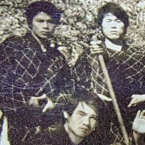
To improve sparring training, Choi’s instructor, Major Woo Jong Lim (see his photo), began developing the Sparring Patterns in South Korea in the late 1950’s. Choi got involved in 1961, when he took a gruelling overnight trip by train and bus to meet General Choi Hong-Hi in Dongducheon, South Korea, where the General was putting together Tae Kwon Do’s first patterns. The General had cleared his office of furniture and was in such a hurry to start that he didn’t offer the young C. K. Choi a glass of water after the journey.

The General credits C. K. Choi with developing the Gae-Baek pattern, which is practiced worldwide in the International Taekwon-Do Federation (ITF). C. K. Choi also helped with sequences of other patterns. Still, CK Choi believes that the traditional patterns (Ch’ang Hon) are good for exercise but aren’t effective for fight training.

“Gae-Baek and the other patterns were not practical for sparring,” he told me. “They were too similar to old Karate -- very stiff, and not natural for sparring. Tae Kwon Do aims to train body and mind. Tae Kwon Do can be only as good as its practioners' fighting ability and mental discipline."

He repeats that anything called “Tae Kwon Do” must work in any fighting situation – on the street, in a bar, in a UFC ring, in formal competitions, in the Olymics, anywhere. If it’s a derivative of original Tae Kwon Do (which was used in combat, especially during the Vietnam War), then it must by devastating physically.

C. K. Choi completed Major Woo Jong Lim’s Sparring Patterns in the 1970’s in Canada. The "Forearm Block” and “Guarding Block,” which used to be available here, will soon be available on DVD.

 
C K Choi shows "Hammerfist-Striking Sparring Pattern"

Posted by This e-mail address is being protected from spambots, you need JavaScript enabled to view it , July 18, 200

These Hammerfist Strikes are harder than they look -- much harder. Grandmaster C. K. Choi demonstrates the second Sparring Pattern that he shared with me -- "Hammerfist-Striking Sparring Pattern" -- another example of original Tae Kwon Do, from the 1960s.

“We must take sparring more seriously, then Tae Kwon Do will grow,” Choi explained. “People have to see that Tae Kwon Do works on the street, in the ring, anywhere."

The Sparring Pattern used to be posted here, but I removed it, because it will soon be available on DVD.

 
Grandmaster C. K. Choi and "Punching Sparring Pattern"

By This e-mail address is being protected from spambots, you need JavaScript enabled to view it , July 14, 2009


You need to a flashplayer enabled browser to view this YouTube video


Last month, I interviewed Grandmaster Chang Keun (C. K.) Choi, who helped create Tae Kwon Do. He was the world’s first champion in the art, a two-time winner of Korea’s full-contact, mixed-martial-arts championships in 1962 and 1963. If you know anything about the bare-knuckled, heavyweight sparring in those days – in Karate, Tae Kwon Do, Tang Soo Do, Kong Soo Do, whatever – then you know how tough and talented he had to be.

He still is. He allowed me to videotape a couple of the Sparring Patterns that he developed in South Korea and Canada, techniques that he considers essential in training how to fight. Here’s one: “Punching Sparring Pattern,” which is done in three positions (stationary, sliding forward, and sliding backward). The punches are executed continuously with maximum speed and power, which means that you need to engage the hips – all your momentum – for every punch, without flailing, and with the intention that each punch is a knock-out to a vital spot.

“A lot of Tae Kwon Do students do weak techniques that put them in a danger,” Choi told me. “All attacks must have enough power to damage or knock-out an opponent.”

In the video above, CK Choi demonstrates the punches slowly, in stationary position, so you can see each technique. In total, you should do 30 punches (10 for each position). Choi knocked out many opponents with some of these punches – both in the ring and out. More about those stories in future posts.

For now, please read what he told me about himself. If any of you know where we can find the “Educational Film” that he talks about, please contact me ( This e-mail address is being protected from spambots, you need JavaScript enabled to view it ). C K Choi hasn’t been able to track it down. He writes:

“My Tae Kwon Do relationship with General Choi Hong Hi began in 1960 after I gave a demonstration for a Tae Kwon Do “Educational Film” in the largest South Korean Army Training Center in Non-San, South Korea, where General Choi was commander. After the demonstration, General Choi and Lieutenant Woo Jong Lim asked me to join the Korean Army in 1960 and to teach Tae Kwon Do in the Training Center. I ended up supporting General Choi in spreading Tae Kwon Do worldwide, until he developed ties with communist North Korea. At the time, South Korea was technically at war with North Korea.”

For more about C. K. Choi and his tell-all book, The Korean Martial Art of Tae Kwon Do & Early History, please see his website. It also includes archival photos and a reliable list of Tae Kwon Do’s pioneers: www.taekwondopioneers.com.

 
WTF Olympic Taekwondo says it will recognize ITF pioneers who created the martial art

May 11, 2009, This e-mail address is being protected from spambots, you need JavaScript enabled to view it

The organization that runs Olympic Taekwondo -- the WTF, or World Taekwondo Federation -- rarely recognizes the men who created the martial art in the 1950s, especially General Choi Hong-Hi and his pioneers. However, WTF President Choue Chong-Won changes course, in the interview below, promising to "recognize all the important ITF and WTF grandmasters in the very near future -- maybe when we have a big celebration in 2009..." Well, Mr. Choue, it's 2009. Tae Kwon Do was created in 1955.

Read more...
 
“The Evolution of Taekwondo From Japanese Karate,” an essay by Eric Madis

April 26, 2009, This e-mail address is being protected from spambots, you need JavaScript enabled to view it

A member of MartialTalk.com recently told me about a great essay by Eric Madis, a senior martial arts instructor in the U.S. who trained in Tae Kwon Do, Tang Soo Do and Aikido. Madis “links the origins of taekwondo to twentieth-century Shotokan, Shudokan, and Shito-ryu karate and shows how the revised history was developed to support South Korean nationalism.”

Read more...
 
<< Start < Prev 1 2 Next > End >>

Page 1 of 2